
High Wind Wall Panels Are Not All Built the Same
High wind wall panels are one of the most consequential decisions on a coastal or hurricane-zone commercial project. Plenty of exterior systems carry general claims about wind performance. Far fewer have been independently tested, approved, and specifically engineered for the kind of sustained pressure and debris impact that Gulf Coast and Florida construction actually demands.
Here is what separates a panel system worth specifying from one that just sounds good on a cut sheet.
What to Look for in a High Wind Wall Panel
Code Approvals That Hold Up in Plan Review
In Florida and along the Gulf Coast, Miami-Dade County Notice of Acceptance (NOA) is the standard that carries real weight. It means the panel system has been independently tested and approved under some of the most rigorous building material requirements in the country. Florida Product Approval is the other credential that matters. Together, they tell a building official that the system has been evaluated by someone other than the manufacturer.
If a panel system cannot produce those documents, that is an answer in itself.
Tested Design Pressure Ratings
Design pressure is expressed in pounds per square foot, both positive and negative. Positive pressure pushes in. Negative pressure pulls outward, and that is usually the more destructive force during a major storm. Look at the actual tested psf ratings, not general language about being hurricane-ready.
A Fastening System That Actually Locks
Standard tongue and groove panels hold together fine under normal conditions. Under sustained negative wind pressure, a panel without a mechanical locking fastener can separate from the wall. The fastening system needs to physically prevent that from happening, not just hold panels in place on a calm day.
Strukturoc Force Five Panels
Strukturoc manufactures the Force Five wall panel system in Eagan, Minnesota, and ships throughout the United States. A significant portion of that work goes to commercial and industrial projects in Florida and along the Gulf Coast, where these approvals are not optional.
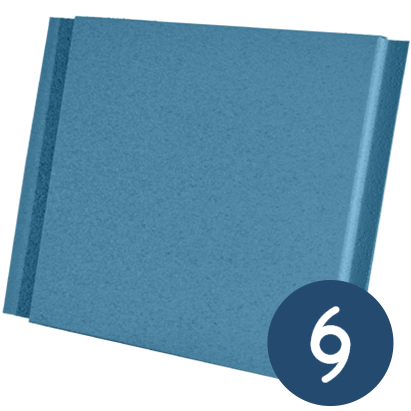
Force Five carries current Miami-Dade County and State of Florida approvals. It is large and small missile impact resistant and it is approved for use inside and outside the High Velocity Hurricane Zone. Approvals get renewed, so rather than print numbers here that go out of date, here are the documents themselves: Miami-Dade County Notice of Acceptance (NOA 24-0812.04) and Florida Product Approval FL24001-R1. Both are kept current on our Specifications and Warranties page, which is the right place to pull an approval for a submittal.
STK2500, Signature Series
The STK2500 is the most widely specified Force Five panel for high-wind commercial construction. It is a proprietary stucco textured steel panel with the following specs:
- 20 gauge G90 galvanized steel
- 16" face width, 18.95" overall width
- 7/8" panel thickness
- Lengths from 1'-2" to 33'-0"
- 20 standard colors plus custom color options
- 20-year warranty
The tongue and groove fit uses hidden locking fasteners that mechanically lock each panel to the wall. That is what keeps panels on the building when negative pressure is pulling hard in the other direction.
STK1500 and STK5500
The STK1500 carries the same Force Five approvals with a embossed Kynar finish. The STK5500 offers an embossed acrylic finish. Both share the same 20 gauge steel construction, the same panel dimensions, the same locking fastener system, and the same Miami-Dade credentials.
Built in America, Backed by People Who Know It
We are not one of the largest wall panel manufacturers in the world, and honestly, we are good with that. There are companies out there with enormous catalogs and global operations, and they serve a market that needs them. That is just not what we are built to do.
What we do is manufacture a focused line of steel wall panels right here in the United States, pack them carefully so they arrive on your job site in good shape, and stay involved through the whole process. When you call us with a question about approvals, custom colors, or project-specific specs, you are talking to someone who actually knows this product because they work with it every day.
We have been doing this since 1992. We have seen our panels go up on fire stations, storage facilities, commercial buildings, and coastal projects across the country. Every time we see one of those buildings still looking good years later, that means something to us. That is what we are proud of, and that is what keeps us focused on doing this one thing well.
If you are specifying panels for a coastal or high-wind commercial project, we would be glad to walk through it with you.